
SBL-FNH Phenol Yellowing Inhibitor – Keeps White Nylon Fabrics Bright During Storage, Transport & Export
SBL‑FNH Anti‑Phenol Yellowing Inhibitor for Nylon & Blends
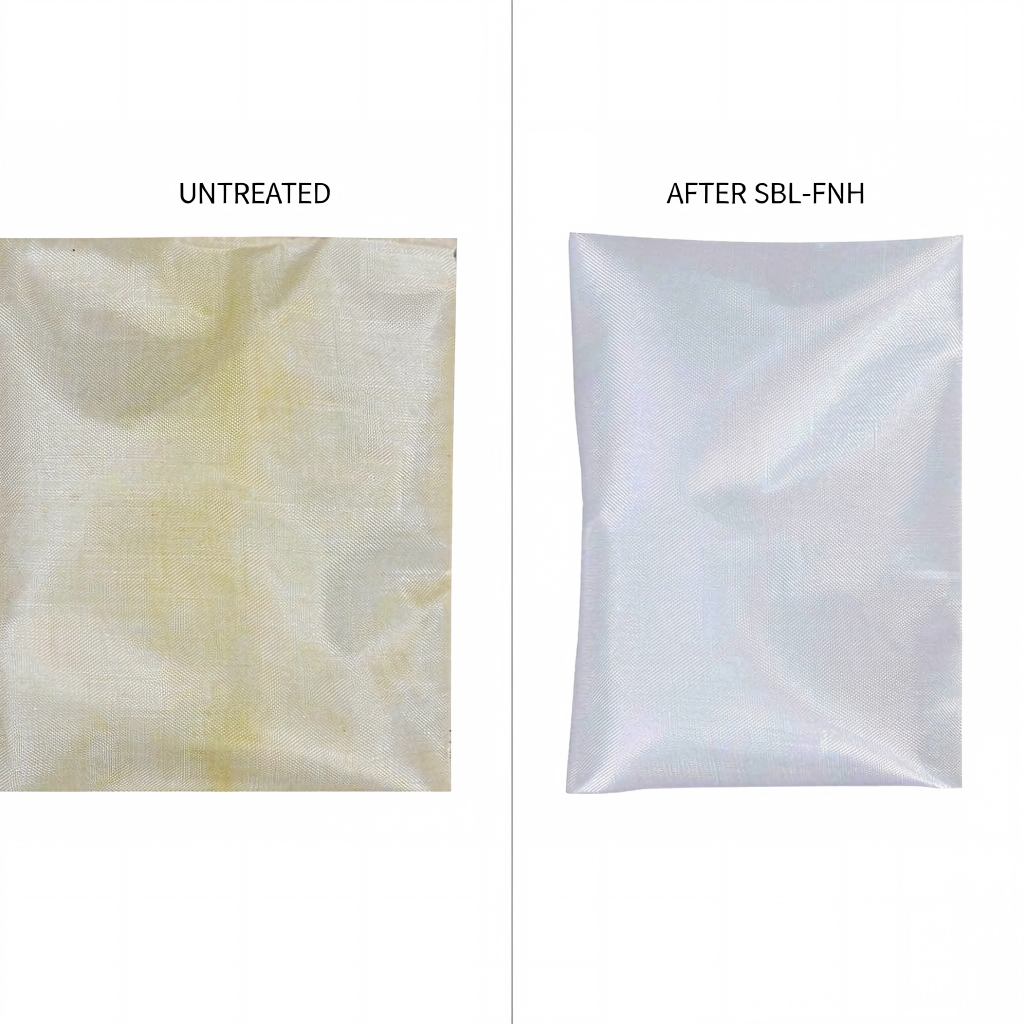
An anionic specialty blend that suppresses phenol yellowing caused by BHT, lignin, NOx and SOx during storage and shipping — keeping nylon and nylon‑blend textiles bright, white and pristine.
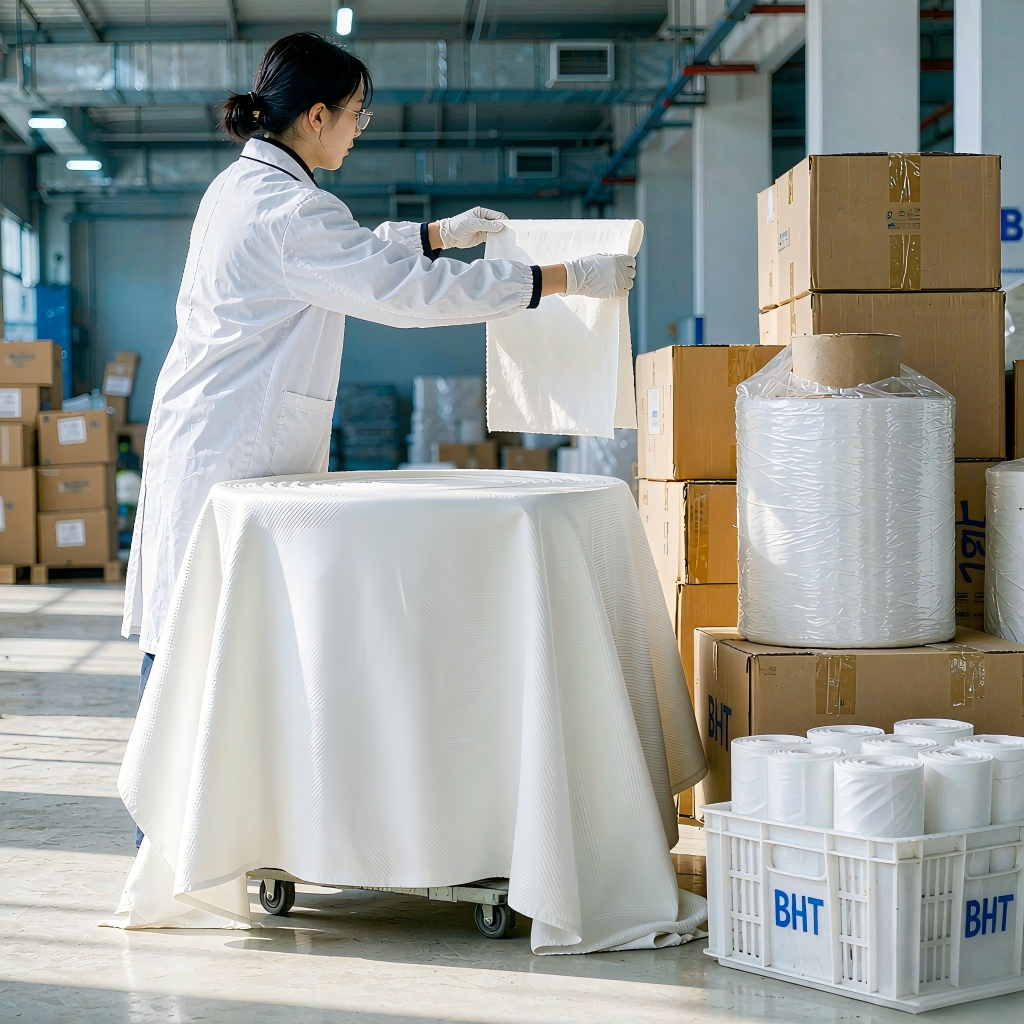
Phenolic yellowing on nylon is triggered by BHT anti‑oxidants in PE packaging, lignin in cardboard, and atmospheric NOx / SOx gases. SBL‑FNH neutralizes these phenolic compounds right in the finishing bath — preserving the original shade and whiteness of the finished textile:
Key Benefits
- BHT‑Induced Yellowing Blocked — suppresses the BHT‑ and lignin‑triggered phenol yellowing that strikes nylon during storage and shipment.
- High Nylon Affinity — built for polyamide fibers; applies directly in the fluorescent whitening or dyeing bath without extra steps.
- Excellent Wash Durability — stays bonded to the nylon substrate, so the protection holds up to repeated wash cycles.
- Ultra‑Low Foaming — runs cleanly in continuous padding equipment; no extra defoamer needed in production.
- Acid / Alkali / Electrolyte Stable — stays effective in acidic, alkaline and electrolyte‑heavy baths for a broad process window.
- One‑Bath or Two‑Bath Compatible — can be co‑applied with fluorescent whitening agents, or used as a post‑treatment after dyeing or whitening.
At a Glance
| Indicator | Value |
|---|---|
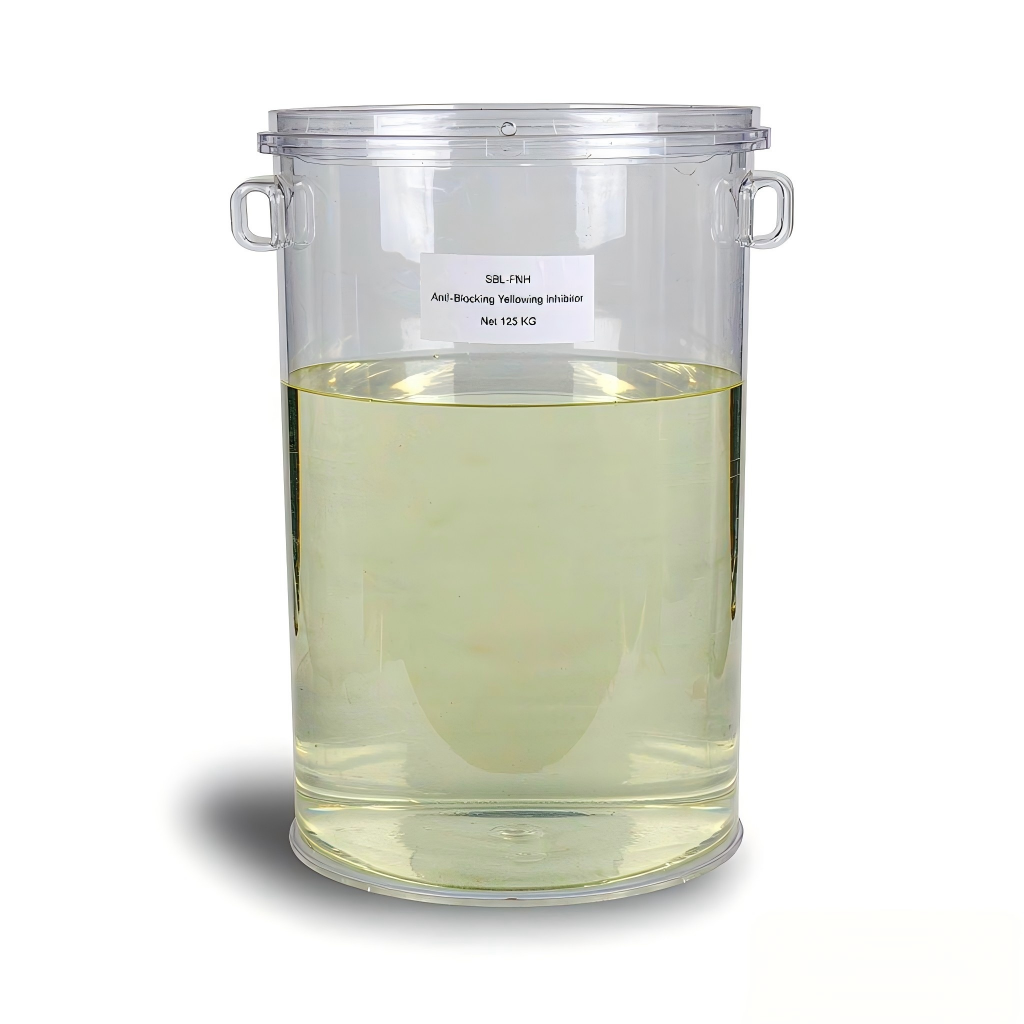
| Appearance | Light yellow transparent liquid |
| Dosage (padding) | 25 – 35 g/L |
| Dosage (exhaust) | 2 – 4 % o.w.f. |
| Shelf life | 12 months |
| Fiber coverage | Nylon & blends (PA 6 / PA 6.6) |
| Foaming | Very low |
| Transport | Not classified as dangerous goods |
Product Specifications
| Property | Value |
|---|---|
| Appearance | Light yellow transparent liquid |
| Composition | Anionic surfactant blend (sodium C14‑17 sec‑alkyl sulfonate + citric acid monohydrate + specialty additives) |
| Ionic type | Anionic |
| pH (10% solution) | 2.0 – 3.0 |
| pH (1% solution) | 2.5 – 3.5 |
| Density (25 °C) | ≈ 1.0 g/cm³ |
| Flash point | > 100 °C |
| Solubility in water | Miscible with cold water in any ratio |
| Stability | Resistant to acid, alkali and electrolytes |
| Foaming | Very low — suitable for continuous padding lines |
| Process temperature | 50 °C (post‑treatment) up to 98 °C (one‑bath with whitening) |
| Process time | ≈ 30 minutes |
| Key actives | Sodium C14‑17 sec‑alkane sulfonate (CAS 97489‑15‑1) + citric acid monohydrate (CAS 5949‑29‑1) |
| Biodegradability | Readily biodegradable (OECD 301) |
Application Methods
SBL‑FNH dissolves in cold water in any ratio and stays stable across a wide pH range. Apply in the final finishing bath — combined with fluorescent whitening, or as a post‑treatment after dyeing.
Method A · Padding (Continuous Pad‑Dry‑Cure)
- Dosage: 25‑35 g/L SBL‑FNH, adjust bath pH to 4‑5
- Pickup: 80%
- Drying: 130 °C
- Ideal for woven nylon and nylon‑blend fabrics on stenter lines.
Method B · One‑Bath with Nylon Whitening
- Dosage: SBL‑FNH 4% o.w.f. + nylon whitening agent 0.2‑0.4% o.w.f. + sequestering agent 0.5‑1 g/L, pH adjusted to 4‑5
- Temperature & Time: 98 °C for 30 min
- Cold rinse after treatment; no negative impact on whiteness performance.
Method C · Post‑Treatment After Whitening or Dyeing
- Rinse fabric first before applying SBL‑FNH in fresh bath
- Dosage: 2‑4% o.w.f., pH 4‑5
- Temperature & Time: 50 °C for 30 min
- Cold rinse after completion; delivers excellent anti‑phenol‑yellowing performance for finished nylon goods.
Always perform lab trial on target fabric before bulk‑scale production.
Suitable Fibers & Blends
Engineered specifically for polyamide substrates — the fiber family most vulnerable to phenol yellowing. Equally effective on pure nylon and on nylon blended with cellulosic, protein or elastic fibers:
- Nylon (PA 6 & PA 6.6) — primary substrate
- Nylon / Spandex — stretch knit
- Nylon / Cotton — blended woven
- Nylon / Wool — premium blend
- Nylon / Viscose — lining fabric
- Nylon / Modal — knit apparel
Safety & Compliance
Health notice (GHS classification):
- Acute oral toxicity — Category 4 (H302 — Harmful if swallowed)
- Skin corrosion / irritation — Category 2 (H315)
- Serious eye damage / irritation — Category 1 (H318)
- Long‑term aquatic hazard — Category 3 (H412)
- Signal word: Danger
- Acute oral LD50 (ATE): 1,667 mg/kg · 8‑h TWA exposure limit: 5 mg/m³ (oil mist reference)
Transport & environmental:
- Not classified as dangerous goods for transport — land (UNRTDG), sea (IMDG) and air (IATA) non‑regulated
- Readily biodegradable — meets OECD 301 thresholds
- Store tightly closed in a cool, dry, well‑ventilated area
- Avoid strong oxidizers, strong reducers and strong acids / bases
Handling: wear chemical‑resistant gloves, safety goggles with side shields and protective clothing when handling the concentrate. Full details refer to MSDS document.
Packaging & Storage
| Item | Detail |
|---|---|
| Package | Standard HDPE export drum — common configurations 25 kg pail or 125 kg drum, palletized for export (confirm exact pack size per order) |
| Shelf life | 12 months from production date in original sealed packaging |
| Storage | Cool, dry, well‑ventilated warehouse · recommended storage 5 – 35 °C · storage and transport temperature not below 10 °C |
| PPE | Chemical‑resistant gloves, safety goggles with side shields and protective clothing when handling concentrate |